
Hydrogen Island CCS 2.0 Platform Overview
Hydrogen Island CCS 2.0 represents a closed-loop thermochemical carbon and energy platform designed to convert biomass and waste into fuels, hydrogen, and carbon products. The system integrates energy production, carbon management, and digital optimization into a unified industrial model.

Investment Thesis
The investment thesis centres on a resilient, multi-product carbon refinery capable of generating fuels, hydrogen, carbon materials, and verified carbon credits. Its closed-loop design improves operational reliability, while AI-AWS optimization and digital monitoring strengthen financial bankability and profits.

Why This Matters Now
Industrial decarbonization, energy security, and carbon removal are converging global priorities. Rising waste disposal costs and constrained supply of low-carbon fuels create strong market demand for integrated solutions. Digitally verified carbon accounting increases investor confidence.

Industrial Architecture
The industrial architecture integrates wet and dry thermochemical conversion processes, including hydrothermal liquefaction, gasification, and pyrolysis, into a single production system. Downstream hydrogen separation and fuel synthesis stages maximize efficiency, while heat recovery loops reduce energy losses.

Feedstock Flexibility
Feedstock flexibility enables continuous plant operation using diverse biomass and waste sources, including agricultural residues, forestry waste, municipal solid waste, and organic materials. Blending different feedstocks stabilizes moisture and energy content, improving system reliability while reducing supply risks

Carbon Flow Accounting
Carbon flow accounting tracks the full distribution of carbon through fuels, captured emissions, biochar, and advanced materials. By monitoring carbon movement across the system, the platform ensures transparent reporting, regulatory compliance, and credible carbon removal verification and integrity.
Energy Integration
Energy integration combines internal syngas utilization and heat recovery systems to minimize external energy requirements. Recovered thermal energy improves plant efficiency and reduces operating costs, while optimized hydrogen utilization ensures stable fuel production.

Hydrogen Balance Strategy
The hydrogen balance strategy prioritizes internal hydrogen production and purification using water-gas shift and separation technologies. By supplying hydrogen directly for refining processes, the platform reduces reliance on external hydrogen markets, lowering operational risk, and improving energy independence.
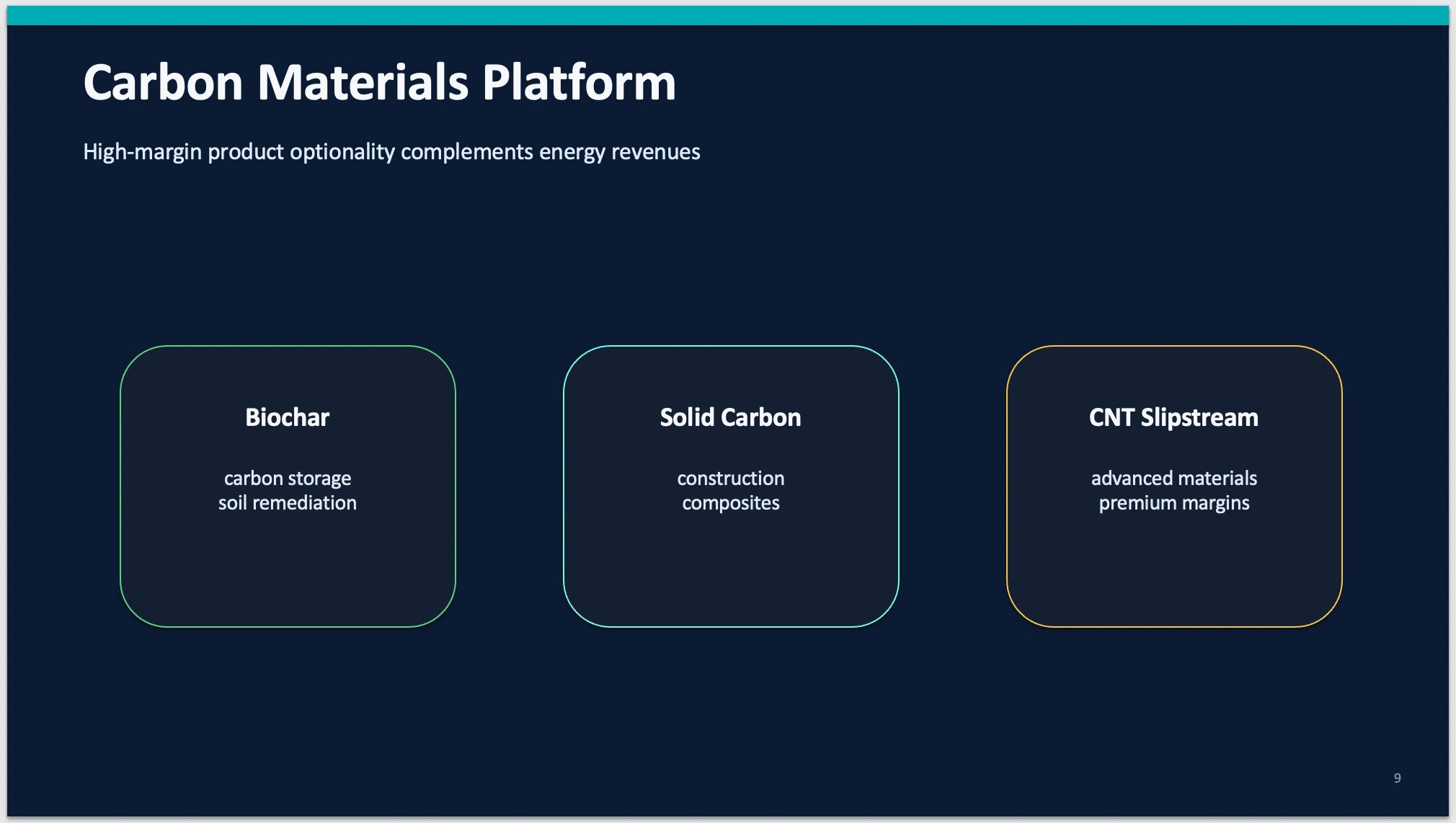
Carbon Materials Platform
The carbon materials platform expands revenue potential beyond fuels by producing high-value products such as biochar, solid carbon, and carbon nanotubes. These materials support applications in agriculture, construction, and advanced manufacturing, generating premium margins while strengthening the platform's role.

Life Cycle Assessment
The life cycle assessment boundary defines the full environmental footprint of the production system, from feedstock collection to fuel use and carbon storage. This comprehensive accounting framework ensures accurate measurement of emissions and removals, supporting regulatory approval, and investor transparency.

Carbon Intensity
Carbon intensity scenarios demonstrate how different product combinations influence overall emissions performance. Increasing carbon storage through biochar, materials, and mineralization shifts the system toward net-negative emissions. This flexibility enables project developers to optimize environmental outcomes.
Sensitivity Analysis
Sensitivity analysis identifies the operational factors that most strongly influence project economics and emissions performance. Key variables include electricity, carbon intensity, hydrogen efficiency, oxygen production energy, and carbon storage durability.
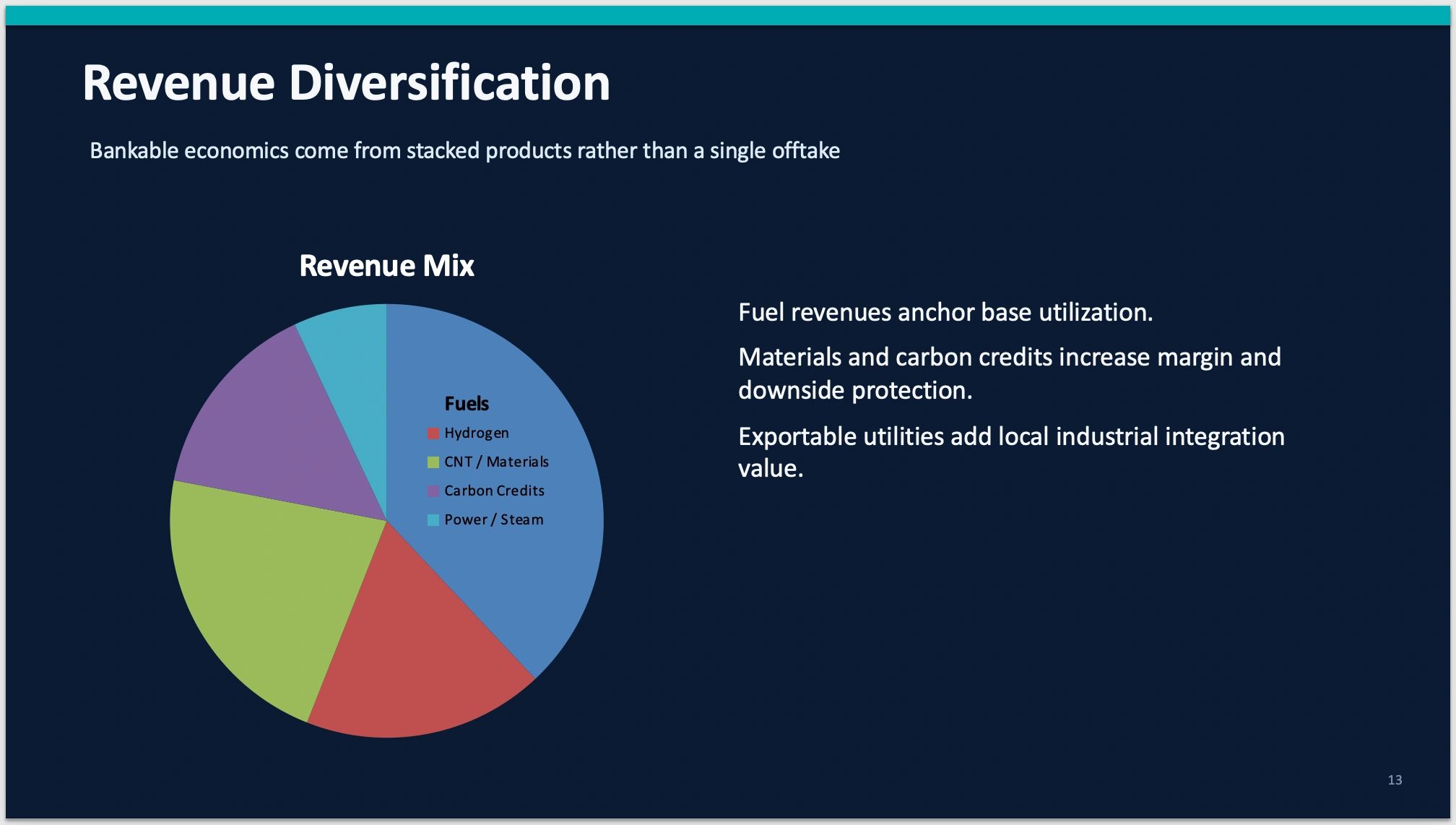
Revenue Diversification
Revenue diversification strengthen financial resilience by combining multiple income streams from fuels, hydrogen, materials, carbon credits and industrial utilities. This multi-product strategy reduces exposure to market volatility, improves profitability, and supports cash flow making the platform attractive.
AI-AWS Optimization
AI-AWS optimization layer provides real-time monitoring, predictive control, and digital carbon accounting across entire facility. Cloud-based analytics optimize feedstock blending, hydrogen production, and energy recovery, while automated reporting supports regulatory compliance and carbon credit certification.
Strategic Conclusion
Hydrogen Island CCS 2.0 offers a scalable industrial model combining energy production, carbon management, and digital optimization into a single platform. By mitigating operational risk and diversifying revenue streams, the system provides bankable pathway to negative-emissions infrastructure for investors.
